Dutch Translations
Professional Translations and Interpreter Services
Translationz provides professional Dutch translation, Dutch translator and interpreter services in Australia.
Dutch Translation Service Adelaide
Adelaide Dutch Translation
When choosing a Dutch translation service, you should consider experience and expertise. With more than 10 years experience, we are an Australian company that specialises in performing translator services. See why thousands of clients trust us to deliver quality human translations. We have deep experience and we listen to your specific needs.
Adelaide is South Australia's centre of State government and commercial heart. Adelaide has a great history and is currently being re-engergised. It is a great example of a multicultural success story. With the mining boom, Adelaide has recently become a melting pot of people from all parts of the world. Many businesses require a Dutch Adelaide translator to do document translation or interpreting. Effective communication is an essential element of building trust in a business relationship. Our Dutch Adelaide translators at Translationz offer a professional translation service. We can help provide you with a Dutch Adelaide translator or interpreter with our Dutch Adelaide translation service.
Many individuals also require a Dutch Adelaide translation service. Whether you need a personal letter translated, a marriage certificate, birth certificate or any other document certified, Our translators at Translationz can help you. Click on the button on the upper right to receive a free quote. Our Dutch Adelaide translator service is extremely competitive and offers the option of a rapid turnaround time.
Dutch Language
Dutch is the Low German branch of the West Germanic group of Indo-European Languages and related to Frisian, German and English. It is language spoken by over 24 million people in the Netherlands, Belgium and Suriname located in South America and also spoken the Caribbean Sea as a native language. Over 5 million people speak the language as its second language. It is also spoken in several former Dutch colonies in Germany and France. It is also widely spoken in Nambibia. It became the official language of Belguim in 1930.
The Dutch language name is believed to have originated about 700AD, however the process of standardisation started in the Middle Ages. The word Dutch comes from the old Germanic word theodisk, meaning 'of the people'. Theodisk in modern German terms has become deutsch and in Dutch has become the two forms: duits, meaning German, and diets meaning something closer to Dutch but is no longer in general use.
The language evolved from the various dialects but mostly based from the urban Holland dialects. Today, Dutch dialects are remarkable diverse and distinct. Today in the Netherlands Dutch is s also called “Holland”, the Dutch mostly refer to their language as Nederlands. It derives from the Dutch word "neder", a cognate of English "nether" both meaning "low", and "down" which is a reference to the geographical texture of the Dutch homelands.
Basic Dutch, when written, looks recognisable to most English readers, although its pronunciation is quite different. The written language is a formal while spoken words are variants of the written language. There are several spelling rules. Dutch grammar is similar to German grammar. As in English, the inflectional grammar of the language has simplified over time.
Dutch Translation Services Overview
Dutch Translationz provides translator and interpreter services in cities across Australia and internationally. Our translators are professional, fast and accurate in all aspects of Dutch language translation.
Dutch Translator

Our Dutch translators are experienced in a wide variety of Dutch document translations. We spend the time to understand your needs and then recommend the right solution. We offer highly qualified, skilled, certified and experienced translators. Our Dutch translators have industry experience in legal document translation, medical records translation, marketing and website translation, technical and engineering documents translation, birth certificate translation, marriage and death certificates and more.
Ask about our enhanced quality assurance methodology, when achieving 100% accuracy is critical for your Dutch translation.
Dutch Interpreter
Translationz also provides experienced Dutch interpreters. Interpreters will come to your site or work over the phone or web. Our Interpreters are articulate, perceptive, professional and presentable and will easily adapt to the situation.
We can offer short or longer term arrangements.
For a free quote, click the “Get A Quote” button to the right of this screen, or call us on any phone number listed on this website.
Dutch Translations
Professional Translations and Interpreter Services
Translationz provides professional Dutch translation, Dutch translator and interpreter services in Australia.
Dutch Translation Service
Dutch Translator and Dutch Interpreter Services
 With more than 10 years of experience, we are an Australian company that specialises in performing Dutch translator services and we have been trusted by thousands of clients to deliver quality human translations. We have deep experience and we listen to your specific needs. Our Dutch translator and Dutch interpreter services are available across Australia including Melbourne, Sydney, Brisbane, Canberra, and all other capital cities.
Dutch Language
Your Dutch translator will have a background on the Dutch language history. Dutch is the Low German branch of the West Germanic group of Indo-European Languages and related to Frisian, German and English. It is a language spoken by over 24 million people in the Netherlands (or Holland as we call it in Australia), Belgium and Suriname located in South America and also spoken the Caribbean Sea as a native language. Over 5 million people speak the language as their second language. It is also spoken in several former Dutch colonies in Germany and France. It is also widely spoken in Nambibia. It became the official language of Belgium in 1930. If you are doing business or have contact with any of these countries and your need assistance, then call us or submit a request for a quote for a Dutch translator.
Your Dutch interpreter will have an understanding of the history of the language. The Dutch language name is believed to have originated about 700AD, however, the process of standardisation started in the Middle Ages. The word Dutch comes from the old Germanic word theodisk, meaning 'of the people'. In Australia, we have Dutch speakers in all major cities including Sydney, Melbourne, Brisbane, Canberra, Adelaide and Perth.
When performing a Dutch translation, it is useful to understand that the language evolved from the various dialects but mostly based from the urban Holland dialects. Your Dutch interpreter understands that Dutch dialects are diverse and distinct. Today in the Netherlands Dutch is also called “Holland”, the Dutch mostly refer to their language as Nederlands. It derives from the Dutch word "neder", a cognate of English "nether" both meaning "low", and "down" which is a reference to the geographical texture of the Dutch homelands.
Although its pronunciation is quite different, basic Dutch looks recognisable to most English readers, . The written language is a formal while spoken words are variants of the written language. There are several spelling rules. Dutch grammar is similar to German grammar. As in English, the inflectional grammar of the language has simplified over time. Get your own Dutch translator today.
Dutch Translation Services Overview

Dutch Translationz provides translator and interpreter services in cities across Australia and internationally. Our translators are professional, fast and accurate in all aspects of Dutch language translation.
Dutch Translator
Our Dutch translators are experienced in a wide variety of Dutch document translations. We spend the time to understand your needs and then recommend the right solution. We offer highly qualified, skilled, certified and experienced translators. Our Dutch translators have industry experience in legal document translation, medical records translation, marketing and websites, technical and engineering documents, birth, marriage and death certificates and more.
Ask about our enhanced quality assurance methodology, when achieving 100% accuracy is critical for your Dutch translation.
Dutch Interpreter
Translationz also provides experienced Dutch interpreters. Interpreters will come to your site or work over the phone or web. Our Interpreters are articulate, perceptive, professional and presentable and will easily adapt to the situation.
We can offer short or longer-term arrangements.
For a free quote, click the “Get A Quote” button to the right of this screen, or call us on any phone number listed on this website.
Danish
Professional Translations and Interpreter Services
Translationz provides professional Danish translation, Danish translator and interpreter services in Australia.
Danish Translation Service
Danish Translator and Danish Interpreter Services
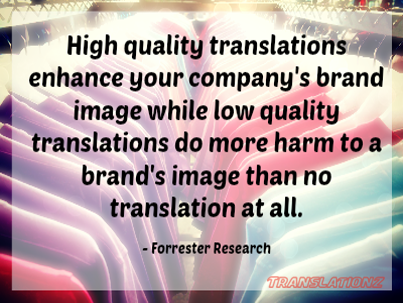
Our Danish translator and Danish interpreter services are available across Australia. We also offer Danish interpreters for Australians travelling internationally and a Danish translator for all of your document translations. Face to face interpreters are available for your meetings in Australia, and Danish document translation services are available for all your Danish translation needs. Telephone translator services are available for your business meetings.
Danish Translation Services Overview
Danish Translationz provides translator and interpreter services in cities across Australia and internationally. Our translators are professional, fast and accurate in all aspects of Danish Danish translation.
Our Danish translators are experienced in a wide variety of Danish document translations. We spend the time to understand your needs and then recommend the right solution. We offer highly qualified, skilled, certified and experienced translators. Our Danish translators have industry experience in legal document translation, medical records translation, marketing and websites, technical and engineering documents, birth, marriage and death certificates and more.
Ask about our enhanced quality assurance methodology, when achieving 100% accuracy is critical for your Danish translation.
Translationz also provides experienced Danish interpreters. Interpreters will come to your site or work over the phone or web. Our Interpreters are articulate, perceptive, professional and presentable and will easily adapt to the situation.
We can offer short or longer-term arrangements for your Danish interpreting assignments. Recent Danish Translation and Danish Interpreter Projects Danish Interpreter Services.
We are specialists in our Danish interpreting across Australia.
For a free quote, click the “Get A Quote” button to the right of this screen, or call us on any phone number listed on this website.
Danish Translation
We were requested to translate Danish documents for a court case. Documents were translated and certified and the client was extremely satisfied.

Danish Legal Interpreter (Danish Court Interpreter)
A Danish interpreter was required for this court case. All of our Danish interpreters were fully booked but we were able to meet these clients needs by flying our Danish court interpreter in from interstate.
Certified Danish Birth Certificate Translation
Translationz can perform a rapid turnaround of a certified translation of Danish Birth Certificate. You can upload your scanned certificate for a rapid response and a quotation. Our recent birth certificate translations have included:
Danish Translation Melbourne Birth Certificate translation
Danish Translation Brisbane Birth Certificate translation
Danish Translation Sydney Birth Certificate translation
Danish Translation Canberra Birth Certificate translation
Danish Translation Perth Birth Certificate translation
Danish Translation Adelaide Birth Certificate translation
Danish Interpreter Services
We are specialists in our Danish interpreting across Australia.
Danish Medical Interpreter
We sent our qualified interpreter to assist with an urgent medical matter. Communication was clear and effective and the medical outcome was good.
For a free quote, click the “Get A Quote” button to the right of this screen, or call us on any phone number listed on this website.
Danish Language
Danish is a North Germanic language spoken by around six million people, principally in the country of Denmark and in the region of Southern Schleswig in northern Germany, where it holds minority language status. There are also significant Danish-speaking communities in USA, Canada, and Argentina. Due to immigration and language shifts in urban areas around 15-20% of the population of Greenland speaks Danish as their home language.
Danish is largely mutually intelligible with Norwegian and Swedish. Proficient speakers of any of the three languages can understand the others, though studies have shown that speakers of Norwegian generally understand both Danish and Swedish far better than Swedes or Danes understand each other. Both Swedes and Danes also understand Norwegian better than they understand each other's languages.
Along with the other North Germanic languages, Danish is a descendant of Old Norse, the common language of the Germanic peoples living in Scandinavia during the Viking Era. Danish, together with Swedish, derives from the East Norse dialect group, while the Old Norwegian dialects before the influence of Danish and Norwegian Bokmål is classified as a West Norse language together with Faroese and Icelandic. A more recent classification based on mutual intelligibility separates modern spoken Danish, Norwegian and Swedish into a Mainland Scandinavian group while Icelandic and Faroese are placed in a separate category labelled Insular Scandinavian.

Danish has a relatively large vowel inventory consisting of 16 phonemes and is distinguished by the many pharyngealized sounds, including both vowels and consonants. Written Danish and Norwegian Bokmål are particularly close, though the phonology (that is, the system of relationships among the speech sounds that constitute the fundamental components of the language) and the prosody (the patterns of stress and intonation) differ somewhat.
Danish is a mandatory subject in school in the Danish dependencies of the Faroe Islands (where it is also an official language after Faroese) and Greenland (where, however, the only official language since 2009 is Kalaallisut and the language[clarification needed] is now spoken as lingua franca), as well as the former crown holding of Iceland.
The Danish writing system uses the Latin alphabet and is based on the 26-letter alphabet with an additional three letters - Æ/æ, Ø/ø, and Å/å - placed at the end.
In 1948, Danish underwent a major orthography reform which introducedÅ/å character as a replacement for aa. The old usage of aa can still be found in Danish names and historical documents. According to the Wikipedia, the Æ/æ character "represents a simple vowel...the same phoneme is represented in Swedish by the letter 'Ä', and in German by 'A-Umlaut. The Ø/ø character, on the other hand, is a unique vowel in Danish and Norwegian while the letter Ö in Turkish, Finnish, Swedish, Icelandic, and German alphabets is the equivalent.
The Danish language is an important language as historically major works of literature and thought have been written. Examples of noteworthy authors include Kierkegaard, Hans Christian Andersen, and Karen Blixen).
Contact us for your Danish translation using our professional translators.
Danish
Professional Translations and Interpreter Services
Translationz provides professional Danish translation, Danish translator and interpreter services in Australia.
Danish Translation Service for All Cities
Danish Translator All Cities

Getting a great translator is as easy as calling or requesting a quote.
Contact us by clicking on the Get a Quote on the right side of this page or call us.
Effective communication is an essential element of building trust in a business and personal relationship. Our Danish translators at Translationz offer a professional translation service. We can help provide you with a Danish translator or Danish interpreter with our translation service.
Many individuals also require a Danish translation service. Whether you need a personal letter translation, a marriage certificate translation, birth certificate translation, a medical document translation, legal document translation, website translation or any other certified translation, our translators at Translationz can help you. Click on the button on the upper right to receive a free quote. Our Danish translator service is extremely competitive and offers the option of rapid turnaround time.
Danish Language
Danish is a North Germanic language spoken by around six million people, principally in the country of Denmark and in the region of Southern Schleswig in northern Germany, where it holds minority language status. There are also significant Danish-speaking communities in USA, Canada and Argentina. Due to immigration and language shifts in urban areas around 15-20% of the population of Greenland speaks Danish as their home language.

Danish is largely mutually intelligible with Norwegian and Swedish. Proficient speakers of any of the three languages can understand the others, though studies have shown that speakers of Norwegian generally understand both Danish and Swedish far better than Swedes or Danes understand each other. Both Swedes and Danes also understand Norwegian better than they understand each other's languages.
Along with the other North Germanic languages, Danish is a descendant of Old Norse, the common language of the Germanic peoples living in Scandinavia during the Viking Era. Danish, together with Swedish, derives from the East Norse dialect group, while the Old Norwegian dialects before the influence of Danish and Norwegian Bokmål is classified as a West Norse language together with Faroese and Icelandic. A more recent classification based on mutual intelligibility separates modern spoken Danish, Norwegian and Swedish into a Mainland Scandinavian group while Icelandic and Faroese are placed in a separate category labelled Insular Scandinavian.
Danish has a relatively large vowel inventory consisting of 16 phonemes and is distinguished by the many pharyngealized sounds, including both vowels and consonants. Written Danish and Norwegian Bokmål are particularly close, though the phonology (that is, the system of relationships among the speech sounds that constitute the fundamental components of the language) and the prosody (the patterns of stress and intonation) differ somewhat.
Danish is a mandatory subject in school in the Danish dependencies of the Faroe Islands (where it is also an official language after Faroese) and Greenland (where, however, the only official language since 2009 is Kalaallisut and the language[clarification needed] is now spoken as lingua franca), as well as the former crown holding of Iceland.
The Danish writing system uses the Latin alphabet and is based on the 26-letter alphabet with an additional three letters - Æ/æ, Ø/ø, and Å/å - placed at the end.
In 1948, Danish underwent a major orthography reform which introducedÅ/å character as a replacement for aa. The old usage of aa can still be found in Danish names and historical documents. According to the Wikipedia, the Æ/æ character "represents a simple vowel...the same phoneme is represented in Swedish by the letter 'Ä', and in German by 'A-Umlaut. The Ø/ø character, on the other hand, is a unique vowel in Danish and Norwegian while the letter Ö in Turkish, Finnish, Swedish, Icelandic, and German alphabets is the equivalent.
The Danish language is an important language as historically major works of literature and thought have been written. Examples of noteworthy authors include Kierkegaard, Hans Christian Andersen, and Karen Blixen).
Contact us for your Danish translation using our professional translators.
Croatian
Professional Translations and Interpreter Services
Translationz provides professional Croatian translation, Croatian translator and interpreter services in Australia.
Croatian Translation Service for All Cities
Croatian Translator All Cities
Getting a great translator is as easy as calling or requesting a quote.
Contact us by clicking on the Get a Quote on the right side of this page or call us.
Effective communication is an essential element of building trust in a business and personal relationship. Our Croatian translators at Translationz offer a professional translation service. We can help provide you with a Croatian translator or interpreter with our translation service.
Many individuals also require a Croatian translation service. Whether you need a personal letter translation, a marriage certificate translation, birth certificate translation, a medical document translation, legal document translation, website translation or any other certified translation, our translators at Translationz can help you. Click on the button on the upper right to receive a free quote. Our Croatian translator service is extremely competitive and offers the option of rapid turnaround time.
Croatian Language
Croatian is a standardized variety of the Serbo-Croatian language used by Croats, principally in Croatia, Bosnia and Herzegovina, the Serbian province of Vojvodina and other neighbouring countries. It is the official and literary language of Croatia and one of the official languages of the European Union. Croatian is also one of the official languages of Bosnia and Herzegovina and neighbouring countries.
Today, the Croatian language is spoken by approximately 6 million people, primarily in the country of Croatia where it serves as the official national language. The Croatian language also is spoken in nearby Bosnia and Herzegovina, as well as Austria, Hungary, Slovakia, and Italy.
The written Croatian language, in about the 9th century, is believed to have started when Old Slavonic was adopted as the religious language of choice. The first known Croatian literary text dates from approximately the 12th century AD.

It was not until the early 19th century that a standardised written Croatian language, based on Latin script, was developed. This a movement, spearheaded by Croatian national Ljudevit Gaj. from 1830, Gaj led the Illyrian movement which chose the Stokavian dialect as the basis for a standardised written Croatian language.
Standardised Croatian is based on the most widespread dialect of Serbo-Croatian, Shtokavian, more specifically on Eastern Herzegovinian, which is also the basis of Standard Serbian, Bosnian, and Montenegrin. The other Serbo-Croatian dialects spoken by Croats are Chakavian, Kajkavian, and Torlakian (by the Krashovani). Cakavian is spoken mostly along the Croatian coast and on the Adriatic islands, while Kajkavian is spoken primarily in the north of Croatia. The rest of the region generally uses the Stokavian dialect.
These four dialects, and the four national standards, are usually subsumed under the term "Serbo-Croatian" in English, though this term is controversial for native speakers, and paraphrases such as "Bosnian-Croatian-Montenegrin-Serbian" are therefore sometimes used instead, especially in diplomatic circles.
The Serbian, Bosnian and Croatian languages are all very similar when spoken. In fact, American, British, and Australian English are less similar to one another than Serbian, Bosnian and Croatian languages. All three languages share three primary dialects and differ primarily in vocabulary. However, the substantial differences exist in the written language as the Serbian language uses a Cyrillic alphabet while the Croatian language is based on the Latin alphabet.

The modern Croatian literary language developed during the 19th century. In the year 1850, the Vienna Agreement established the Stokavian dialect, which is common to Croatian, Bosnian and Serbian, as the basis of a uniform literary language for all three languages.
The full effect of the significance of the Vienna Agreement was not felt until the late 19th century, however, when a number of official grammar texts, orthographies, and dictionaries of the language known as Serbo-Croatian were published.
After the collapse of Yugoslavia, successor countries such as Bosnia, Serbia, and Croatia turned to language as one way of reaffirming distinct ethnic identities. In the Croatian language, measures were taken to rid the language of the Serbian influence it had felt since the Vienna Agreement of 1850. Even today, Bosnian, Serbian, and Croatian speakers often emphasise the differences of these languages largely because of the complicated political, cultural, and religious history of the region.
Croatian recently, on 1st July, 2013, became a member of the European Union. Croatia opened the doors for its people to have all the benefits and access to all information that the European Union provides. For more information, see Translationz blog post here.
Contact us for your Croatian translation using our professional translators.